Chimney Liner Installation
The smoke chamber and liner work together as part of the same venting path from firebox to flue.
View Liner InstallationThe smoke chamber is the funnel-shaped transition between your firebox and the flue. When it's cracked or poorly parged, it can affect how well your fireplace draws — and how safely.
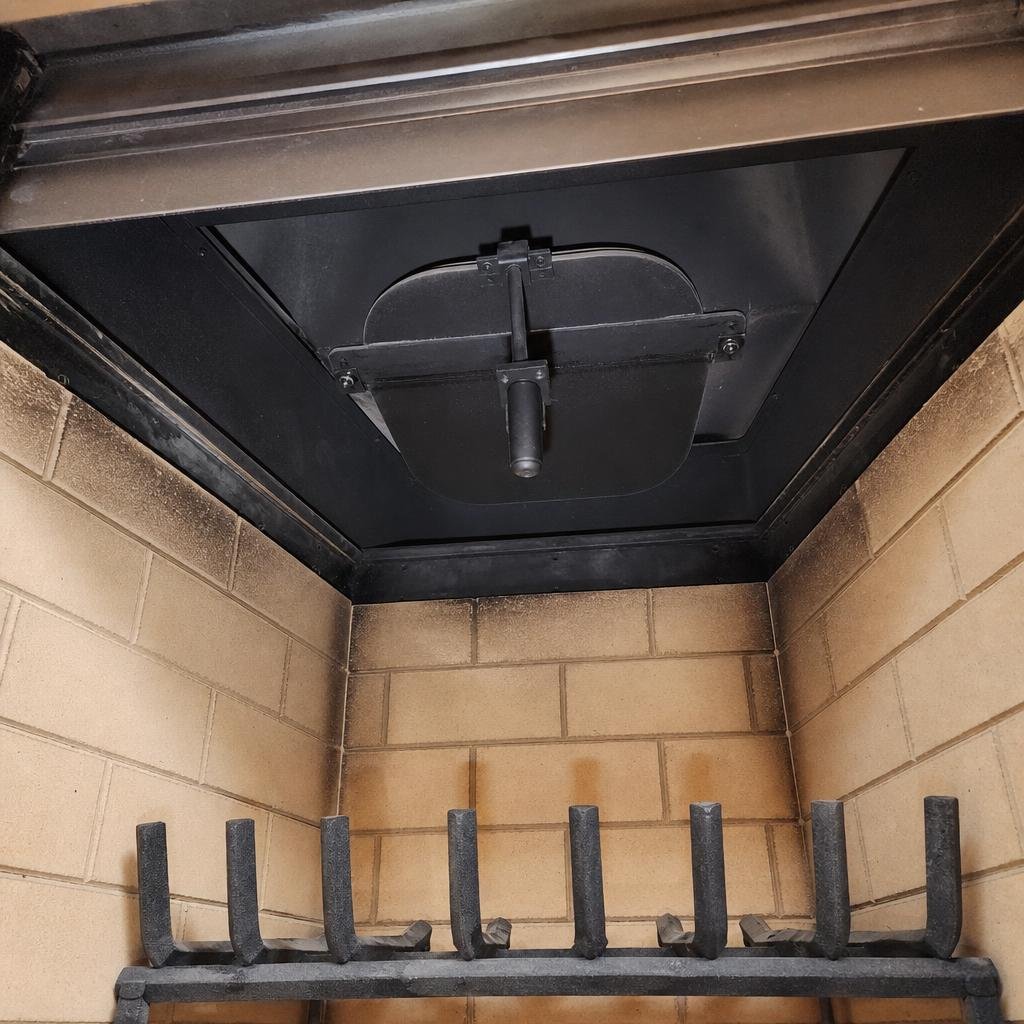
The smoke chamber sits directly above the firebox, funneling smoke and combustion gases up into the narrower flue. It's typically finished with a layer of parging — a smooth coating of mortar or refractory material — that seals rough masonry joints and helps smoke move efficiently upward instead of pooling or spilling back into the room.
Because it sits right above an active fire, this is an area where cracks and gaps matter more than they would elsewhere in the chimney. Damaged parging can expose combustible framing materials nearby to heat they were never meant to be exposed to, and it's a common contributor to a fireplace that smokes into the room instead of drawing properly.
Because the smoke chamber isn't easily visible without the right tools, this is one of the areas we look at closely during a Level 2 inspection, including camera work where needed. Depending on what we find, repair involves applying refractory parging material to seal cracks and smooth rough masonry, restoring both the safety and draft performance of that transition area.
The smoke chamber sits inches from an open flame. Cracks and gaps here aren't cosmetic — they're a direct safety concern.
The smoke chamber and liner work together as part of the same venting path from firebox to flue.
View Liner InstallationDamaged parging in the smoke chamber is sometimes connected to broader masonry deterioration.
View Masonry RepairSee the full list of chimney sweeping, inspection, repair, and waterproofing services we offer.
View Chimney ServicesGet cracks and damaged parging repaired — and ask about our $99 Level 2 inspection to check the area first.