Tuckpointing
Deteriorated mortar joints are often the first sign of masonry trouble, and the easiest to catch early.
View TuckpointingBrick and mortar are durable, but not indestructible. When masonry damage goes beyond the mortar joints, repair work protects the chimney's structural integrity.
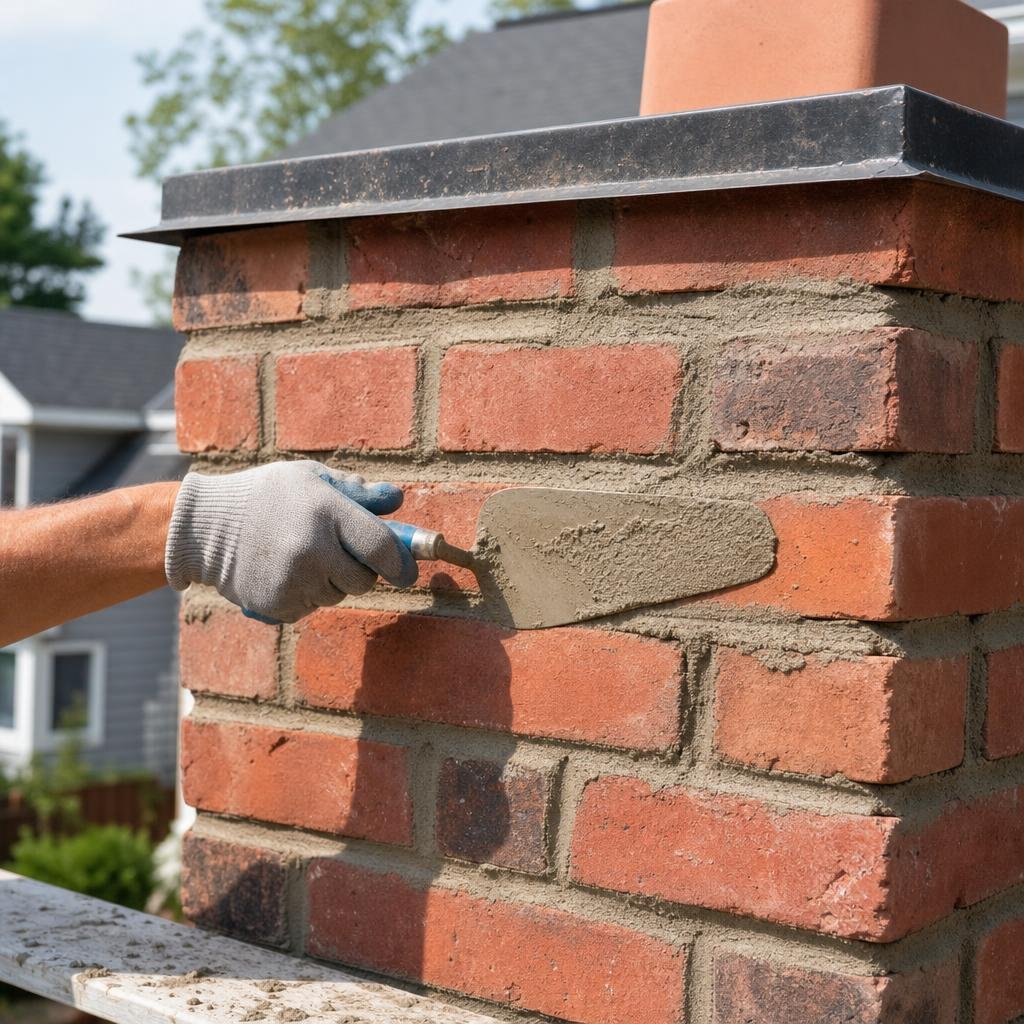
Chimney masonry takes a beating — sun, rain, snow, and repeated freeze-thaw cycles all work against it year after year. When moisture gets into brick, whether through a cracked crown, failed flashing, or worn mortar, and then freezes, it can cause the face of the brick to crack and flake off, a process called spalling. Left alone, that damage compounds, because damaged brick absorbs even more water than intact brick.
Structural masonry damage isn't just cosmetic. A chimney with enough deteriorated brick can develop a lean, lose sections of its structure, or become unsafe to use. Catching damage early, before it spreads beyond a few individual bricks, keeps repair costs and scope manageable.
We assess how far the damage extends — sometimes it's limited to a handful of bricks, sometimes it runs deeper into the structure — often as part of a Level 2 inspection. Damaged brick is removed and replaced to match the existing masonry, and we address whatever let the moisture in to begin with, whether that's the crown, flashing, or mortar joints, so the same damage doesn't return.
Nearly every masonry problem we see traces back to water getting in somewhere else first. Fixing the brick without fixing the entry point just delays the repeat repair.
Deteriorated mortar joints are often the first sign of masonry trouble, and the easiest to catch early.
View TuckpointingWhen brick damage is too widespread for repair, a full or partial rebuild restores the structure.
View Chimney RebuildSee the full list of chimney sweeping, inspection, repair, and waterproofing services we offer.
View Chimney ServicesGet damaged brick repaired and the underlying cause addressed — and ask about our $99 Level 2 inspection.