Flooring is one of those decisions that's hard to undo once it's in, and with four solid options to choose from, it's easy to get stuck comparing specs instead of thinking about how each room actually gets used. The right answer usually isn't the same material for the whole house — it's matching each option to where it performs best.
Carpet: Best for Comfort and Warmth
Carpet is still hard to beat for comfort underfoot, sound absorption, and warmth in colder months, which is why it remains a popular choice for bedrooms and other low-traffic, low-moisture living spaces. It's generally the softest and quietest option, and modern stain-resistant fibers have made it more forgiving than older carpet used to be. Where it falls short is moisture and spills — carpet in a bathroom, kitchen, or basement with any humidity concerns is asking for trouble, and it tends to show wear faster in high-traffic areas like hallways and entryways.
Hardwood: The Long-Term Classic
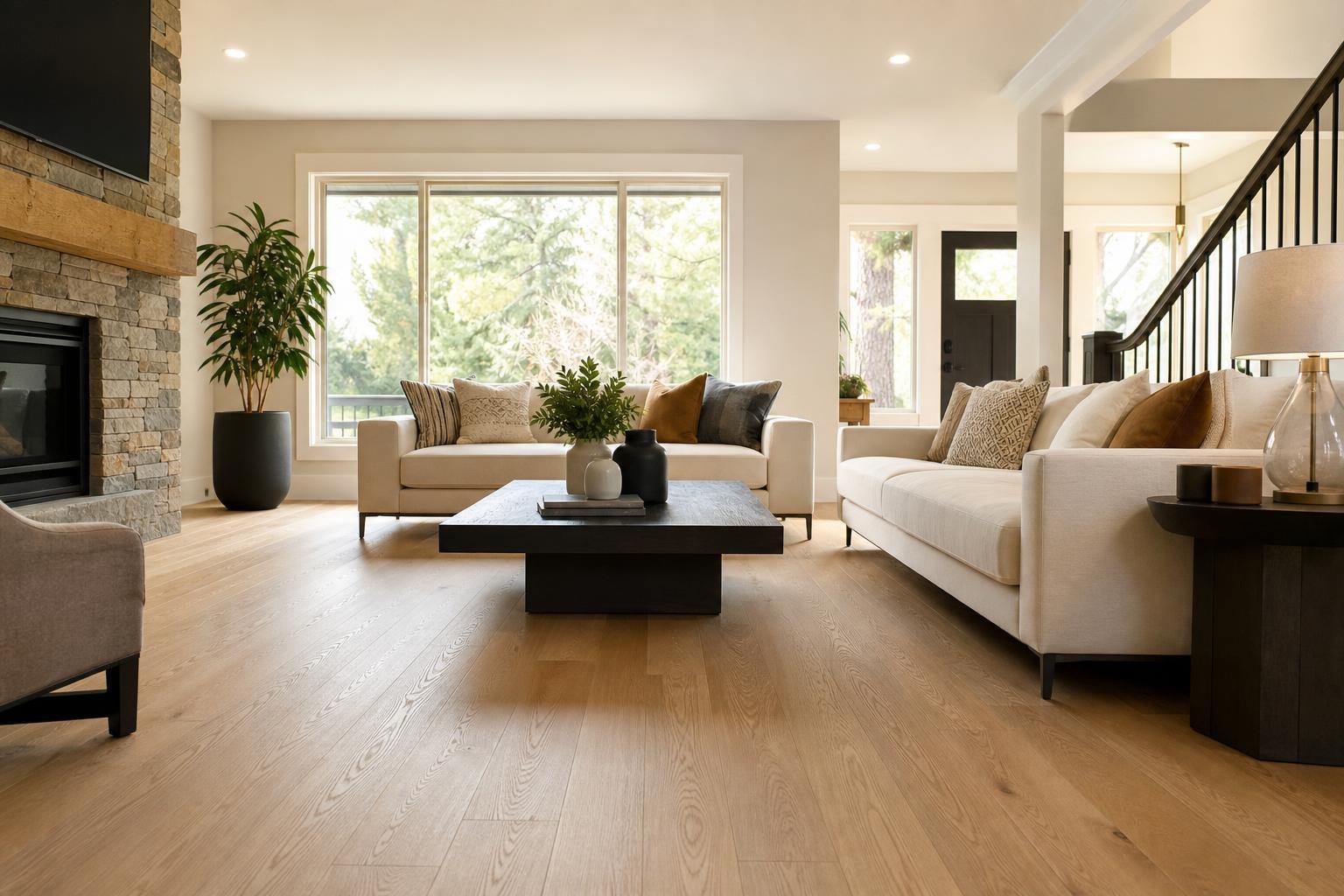
Hardwood offers a timeless look, adds real value to a home, and — unlike the other three options — can be sanded and refinished multiple times over its life, which means a well-maintained hardwood floor can last for decades. It performs well in living rooms, dining rooms, and bedrooms where moisture isn't a concern. The tradeoff is that hardwood is sensitive to water and humidity; it's not a good fit for bathrooms, laundry rooms, or basements, and it's also the most expensive option up front.
Laminate: Budget-Friendly Wood-Look
Laminate gives you a similar wood-look aesthetic to hardwood at a noticeably lower price point, and it holds up reasonably well to everyday foot traffic and scratches. It's a solid choice for living rooms, bedrooms, and other moderate-traffic areas where budget matters. Moisture tolerance varies by product — some laminates handle occasional spills fine, others don't — so it's worth checking the specific product's water resistance before installing it anywhere near a kitchen or bathroom.
Luxury Vinyl Plank: The Moisture-Resistant All-Rounder
Luxury vinyl plank (LVP) has the best moisture resistance of the four options, which makes it a strong choice for kitchens, bathrooms, basements, mudrooms, and anywhere spills or humidity are a regular concern. It's also come a long way visually — today's LVP products offer realistic wood-look and stone-look finishes that are hard to distinguish from the real thing at a glance, plus a comfortable, slightly cushioned feel underfoot. For homeowners who want durability and water resistance without sacrificing style, it's often the most practical all-around pick.
A Simple Decision Framework
When you're deciding room by room, four questions tend to cover it: How much foot traffic does the room get? High-traffic areas favor hardwood, laminate, or LVP over carpet. How much moisture exposure is there? Anywhere near water — kitchens, bathrooms, basements, laundry rooms — points toward LVP first, laminate second (if rated for it), and away from hardwood or carpet. What's the budget? Carpet and laminate are generally the most affordable, LVP sits in the middle, and hardwood is typically the highest up-front investment. And finally, does resale value matter? Hardwood tends to have the strongest pull with buyers, but well-installed LVP in wet-prone areas is increasingly seen as a smart, practical choice rather than a downgrade.
Getting the Installation Right
Whichever material fits your space, the material itself is only half the equation — proper subfloor preparation, acclimation, and installation make the biggest difference in how long any flooring actually lasts. If you're weighing your options room by room, our team can walk through your space and help you land on the right flooring and carpet choice for each area rather than a one-size-fits-all decision for the whole house.